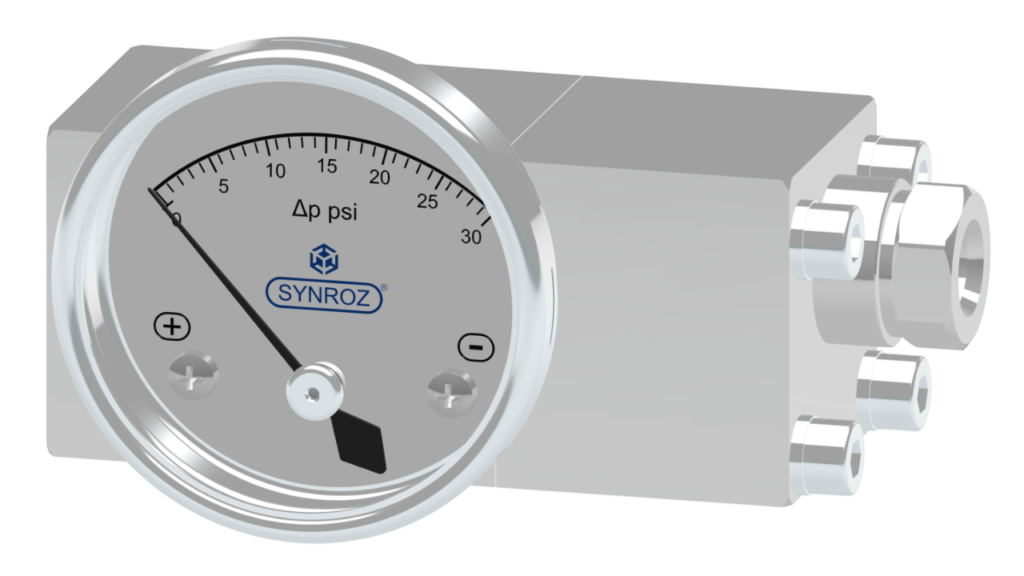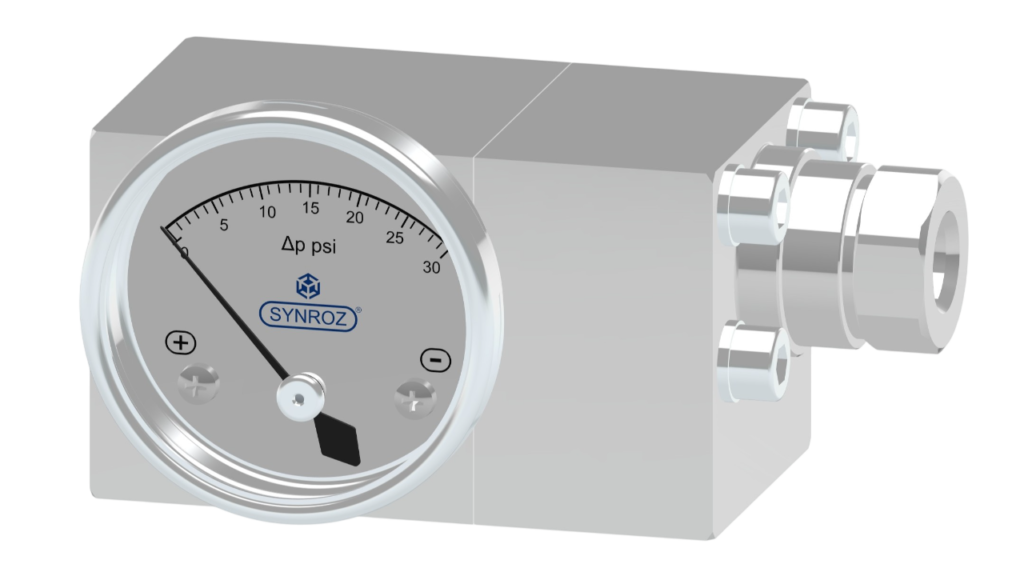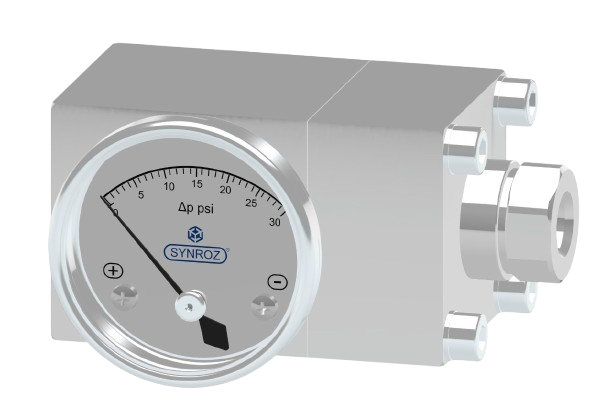
A Diaphragm DP (differential pressure) gauge works by using a flexible diaphragm that separates the high and low pressure sides. The pressure difference causes the diaphragm to flex, and this movement shifts an internal magnet connected to the diaphragm. Outside the gauge body, a rotary magnet coupled magnetically to the internal magnet turns a pointer on the dial to indicate the differential Pressure. This magnetic coupling ensures that the pressure media are fully isolated from the moving pointer mechanism, preventing leakage and wear.
The diaphragm acts as the sensing element, reacting proportionally to the pressure difference across its two sides. Because the diaphragm is flexible but sealed, it creates a total separation between the high and low pressure chambers so there is no bypass of fluid. The diaphragm movement is mechanically translated through a magnet-spring assembly inside, that drives the external rotary magnet, which in turn rotates the pointer on the dial scale with high accuracy.
Such magnetic diaphragm DP gauges are widely used in measuring air, gas, or liquids in applications like filter monitoring, cleanroom control, and HVAC systems. They provide reliable, repeatable differential pressure readings with a precise analogue indication that does not require electrical power. These gauges have additional built-in switches or transmitters for alarm or remote monitoring functions.
- The flexible diaphragm senses differential pressure via deflection.
- An internal magnet moves with the diaphragm linked to a spring.
- A magnetic coupling turns an external pointer without mechanical contact.
- There is total media isolation inside the gauge, preventing leaks.
- Used extensively for gases and liquids, and suitable for various industrial monitoring needs.
This design combines sensitivity, isolation, and mechanical durability for accurate differential pressure measurement