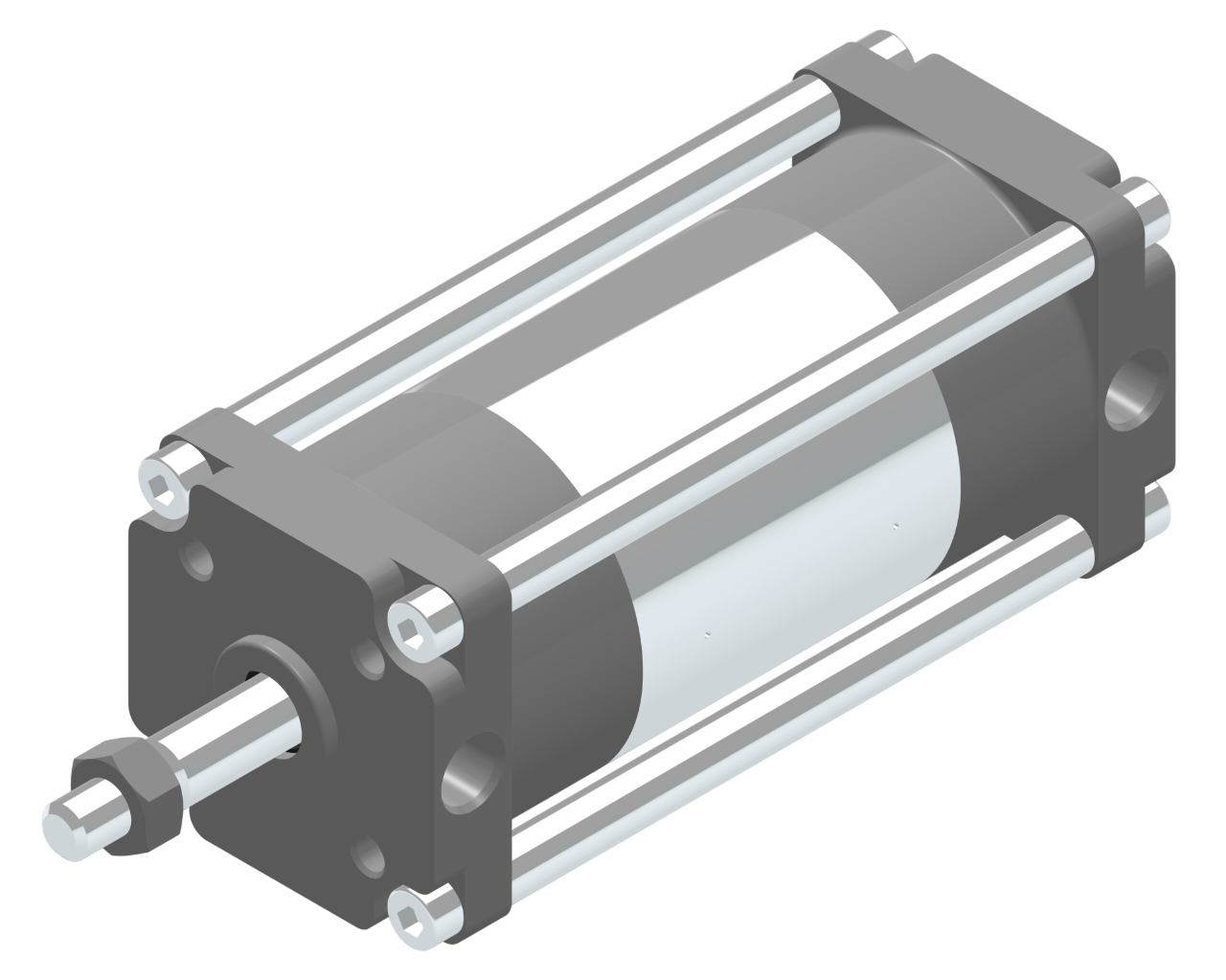
A diaphragm cylinder is a linear actuator that uses a flexible diaphragm instead of a piston to convert pneumatic pressure into linear motion.
These diaphragm cylinders eliminating the sliding friction and wear associated with traditional piston cylinders to provide high sensitivity, repeatability, and low maintenance.
Diaphragm cylinders produce smooth, precise linear movements and can deliver accurate forces for tasks such as clamping, positioning, web tensioning systems, automotive components, fluid control and various automated processes.
Working Principle
- Compressed air enters the chamber on one side of the diaphragm.
- The diaphragm flexes, transmitting linear force to the attached rod or piston, producing motion.
- In single acting cylinders when air pressure is removed or vented, the diaphragm returns to its original position, typically aided by a spring.
- In double acting cylinders the diaphragm returns to its original position pushed back by second side diaphragm connected to same piston.
Key Features and Advantages
- The sealed diaphragm design prevents leakage between the two chambers and isolates actuator internals from the operating environment, ideal for contamination-sensitive and leak-proof requirements.
- Diaphragm cylinders produce smooth, precise linear movements and can deliver accurate forces for tasks such as clamping, positioning, web tensioning systems, automotive components, fluid control and various automated processes.
- Unlike piston cylinders, they avoid friction caused by sliding seals, offering increased service life and lower maintenance.
Diaphragm pneumatic cylinders are particularly useful in applications requiring leak-free environments, sensitive control, and high reliability, making them popular in laboratory instruments and medical devices.